
Resources
EPS foam coating systems
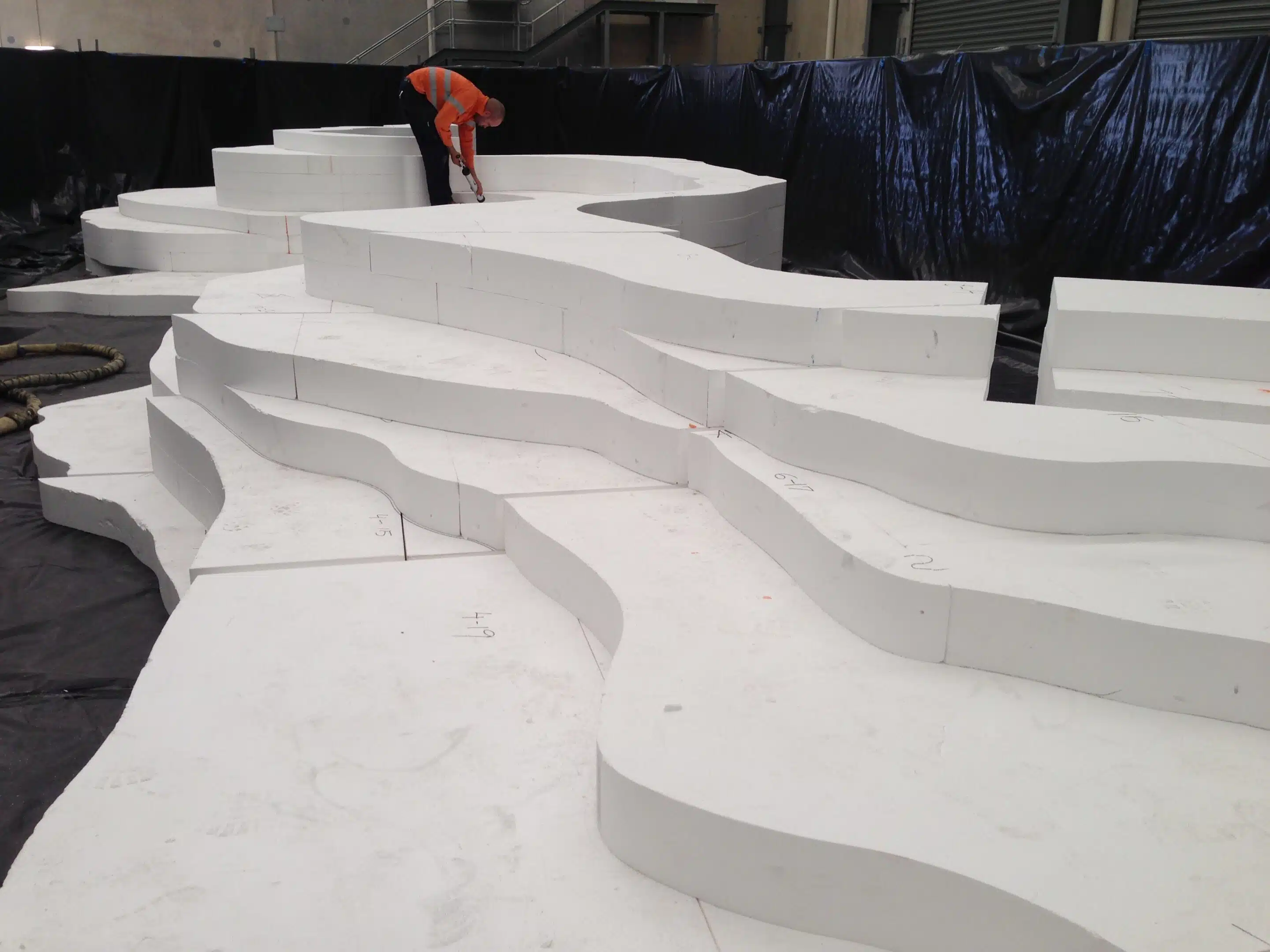
Coating helps turn CNC-cut EPS foam into a more durable, usable project component. Foam Technologies can cut, prepare and finish foam forms for moulds, displays, signage, architectural features and project-specific foam parts.
Why coating matters
A cleaner path from cut foam to finished component
Keeping cutting, preparation and coating in one workflow reduces handling, keeps tolerances easier to manage and helps project teams choose the right finish before production starts.
Foam Technologies can support EPS cutting and coating requirements together, so the finish is considered before the foam is produced.
Wire cutting, foam milling, coating preparation and finishing can be coordinated to reduce double handling and miscommunication.
The right coating choice can reduce rework, improve handling and make the finished foam component better suited to its final use.
Coating grades
Choose the finish by use, durability and surface expectation
The options below keep the original coating grade logic but make it easier to scan before reviewing the full comparison table.
Plywood with resin finish laminated onto foam. Best suited to straight edges where plywood can face the concrete.
Similar to L100, with joints sealed using PU glue. Useful where angled joints or some curves are involved.
Industrial two-coat polyurethane option with some sanding. Practical where function matters more than a premium finish.
Three coats with sanding between stages, bubble removal and final quality checks for a cleaner finish.
Premium proprietary coating with sanding, stronger durability and repairability for demanding applications.
Comparison
Coating option comparison
Use this table as a practical guide when comparing surface finish, time, durability, reuse and cost expectations.
| Attribute | L100 - Plywood | L100h - Plywood + PU Resin Joints | L200 - Polyurethane | L250HF - Enhanced PU | L500MX - Fibreglass + Epoxy |
|---|---|---|---|---|---|
| Description | Plywood with resin finish laminated onto foam. Foam may need cutting to suit plywood thickness. | Similar to L100, with joints sealed using PU glue. Can handle angled joints and some curves. | Industrial two-coat sprayed polyurethane with some sanding. | Three coats with sanding between each stage, bubble removal and final QC. | Premium proprietary fibreglass and epoxy coating. Three coats with sanding. Marine-standard approach. |
| Finish | Class 2 | Class 2 on straighter edges | Class 3 or below. Rougher industrial finish. | Class 2, excellent finish. | Class 2, excellent finish. |
| Time and effort | Excellent | Excellent | Fair | Poor due to higher labour. | Very poor due to high skill and time. |
| Durability | Excellent | Excellent, but joints need care. | Very good, but cracking can be difficult to repair. | Very good, but cracking can be difficult to repair. | Outstanding. Repairable, chemical, UV and impact resistant. |
| Mould reuse guide | 25 | 5-20 | 10-20 | 10-20 | More than 25 |
| Trade-off | Best for straight edges. | Joint weakness needs attention. | Needs extra work for higher finish expectations. | Not easy to repair. | Excellent durability. Can be modularised for easier transport. |
| Cost guide | Low | Low to moderate | Moderate | Higher | Premium |
Cost and reuse notes are guidance only. The right coating depends on geometry, handling, surface expectation, transport and the final use of the EPS foam component.
How to choose
What to confirm before ordering
Foam Technologies can recommend a practical finish faster when the quote request includes how the foam will be used and what the finished surface needs to achieve.
Tell us whether the piece is for moulding, signage, display, architectural detail, transport protection or another EPS application.
Confirm whether the surface needs a rough industrial finish, cleaner presentation finish or a more durable premium coating.
Note whether the foam will be reused, transported in sections, exposed to impact or handled repeatedly during installation.
Send drawings, dimensions, quantities and photos so the team can assess cutting, coating preparation and delivery requirements together.