EPS void former construction
Bridge deck void formers
Lightweight EPS profiles help reduce concrete volume, structural load and handling time in bridge deck construction.
Foam Technologies supplies custom Iso-Lite foam profiles that can be cast in-situ, helping engineers optimise concrete bridge structures without making site installation harder.

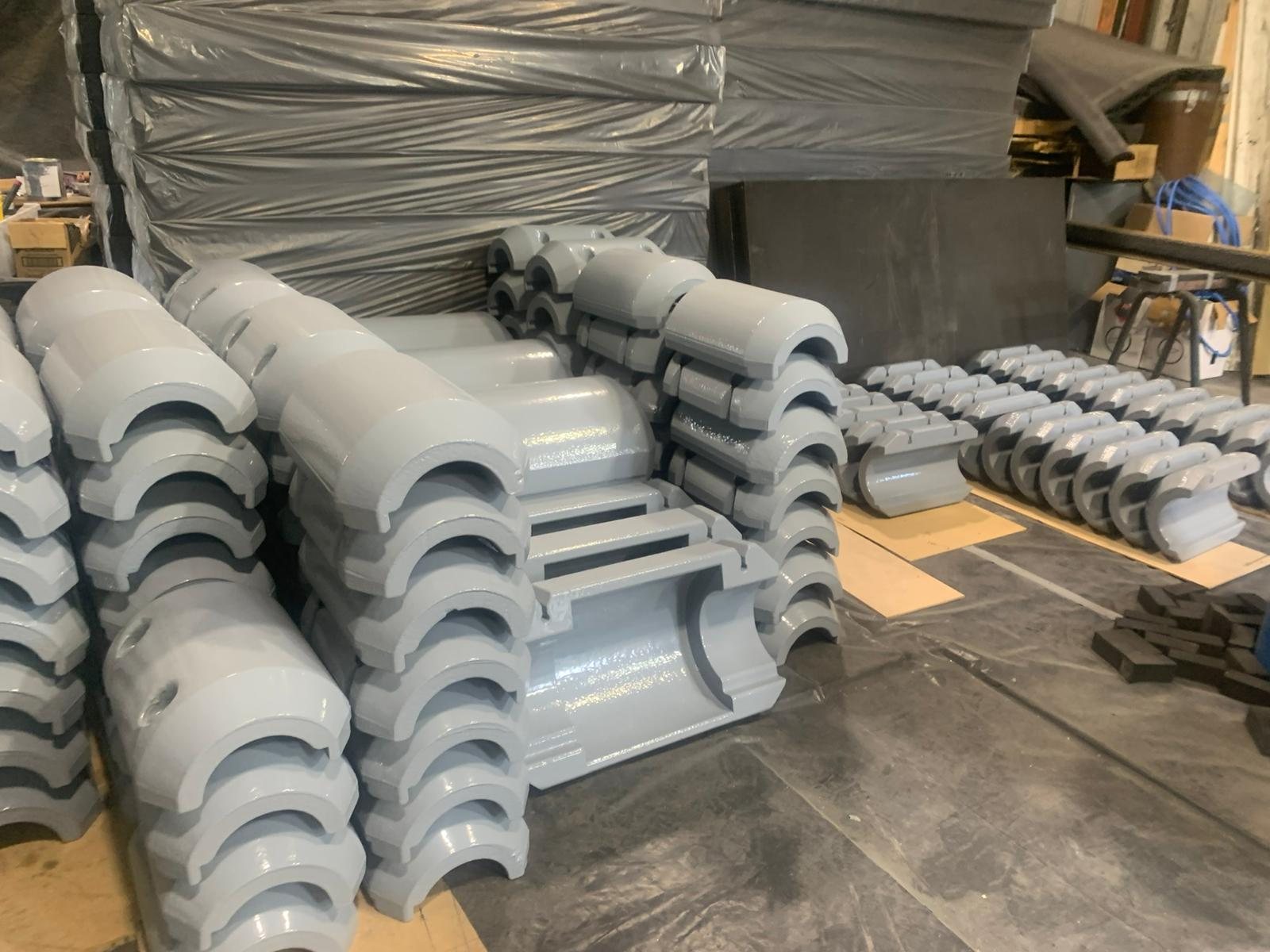
Custom EPS void former profiles prepared for bridge deck concrete works.
Project overview
EPS void formers for efficient bridge deck construction
Expanded polystyrene void formers are used to reduce unnecessary concrete mass while preserving the design geometry of the bridge deck.
Polystyrene void formers provide significant benefits in bridge deck construction, especially where engineers need to reduce weight, control concrete use and keep installation practical on site.
Foam Tech Iso-Lite foam profiles can be shaped to the required profile and cast in-situ. The reduction in concrete volume decreases the load on supporting structures and foundations, improving overall stability and reducing structural demand.

Profile-cut EPS sections can be supplied to suit the deck design.

Lightweight foam formers are easier to position before concrete placement.

EPS profiles reduce concrete volume while maintaining the required form.
Benefits
Why EPS void formers are used in bridge decks
Weight reduction
EPS void formers reduce the overall weight of the concrete structure, lowering demand on support beams and foundations.
Cost efficiency
Reducing the volume of concrete required can lower material use, labour time and installation complexity.
Ease of handling
The lightweight foam profiles are simple to move, cut and place on site, helping contractors keep the program moving.
Thermal performance
EPS has useful insulating properties, making it suitable where thermal behaviour is part of the design consideration.
Lower concrete impact
Using less concrete can reduce the embodied carbon associated with cement-intensive construction works.
Project scope
Applications
Where EPS void formers fit
- Bridge decks and civil structures
- Building foundations
- Floor slabs and concrete void zones
- Retaining walls and shaped concrete forms
Typical specifications
Custom foam profiles
- Material: expanded polystyrene (EPS)
- Density: typically 15-28 kg/m3
- Compressive strength: approx. 70-175 kPa depending on density
- Sizes: custom profiles, blocks and sheets
- Water resistance: highly resistant to water absorption
More project work