
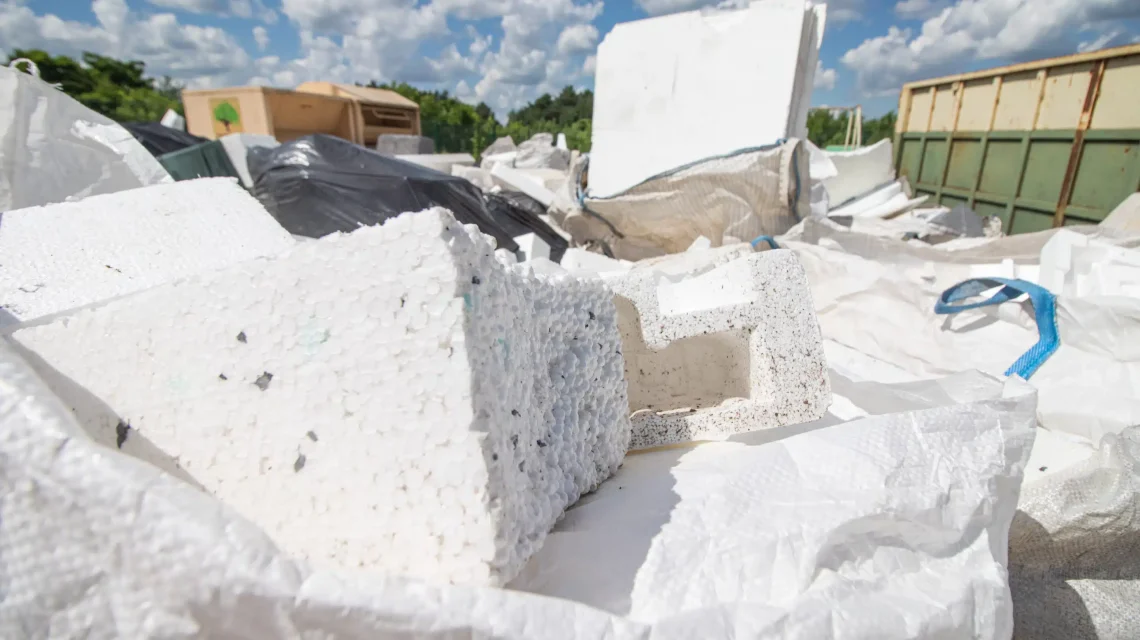
Expanded polystyrene, usually called EPS, is used across construction, insulation, packaging and manufacturing because it is lightweight, easy to shape and practical to transport. Those same qualities make EPS useful on site, but they also mean project teams need a clear plan for offcuts, packaging waste and clean leftover material.
EPS foam is easiest to reuse or recycle when it is clean, dry and separated from general site waste. The best results usually come from planning dimensions early, reducing unnecessary cuts and keeping uncontaminated EPS material apart from mixed construction waste.
Why EPS waste planning matters
EPS is common because it solves several practical project problems at once. It can provide insulation, fill voids, protect products during transport, reduce load in civil works and be cut into project-specific shapes. On a busy project, however, the material can quickly become mixed with tape, food waste, dirt, adhesives, concrete residue or other construction debris.
Once clean EPS is mixed with general waste, it becomes harder to handle responsibly. That is why the most useful recycling decision is often made before the material reaches site. Clear drawings, accurate take-offs and repeatable profiles can reduce unnecessary offcuts before production begins.
Where EPS offcuts usually come from
Construction foam blocks
Void formers, slab infill, formwork and lightweight fill can leave offcuts when dimensions are adjusted late or blocks are modified on site.
Insulation sheets
Wall, floor and underfloor insulation projects can create sheet offcuts around penetrations, edges, corners and non-standard layouts.
Packaging foam
Protective packaging inserts can create smaller pieces when products need custom cavities, shapes or repeat profiles.
Profile cut shapes
Signage, moulds, displays and custom CNC-cut components can create shaped offcuts if the layout is not optimised before cutting.
How to reduce EPS waste before production
The easiest material to manage is the material that never becomes waste. A good EPS order should include more than a rough size. For construction, manufacturing and packaging teams, early details help Foam Technologies recommend a more efficient cutting approach.
- Confirm dimensions before cutting. Send the final width, height, length and quantity wherever possible.
- Group repeat profiles. Repeated shapes are usually easier to plan than one-off pieces that change late in the process.
- Use standard sizes where the project allows. Standard sheets and block dimensions can reduce unnecessary trimming.
- Provide drawings or photos. Simple sketches, CAD drawings or photos can prevent guesswork.
- Tell the supplier how the foam will be used. Construction, insulation, packaging and display work may need different handling decisions.
How to separate EPS for cleaner handling
If a project is likely to produce leftover EPS, plan the separation process before work starts. Clean EPS should be kept away from mixed waste and protected from contamination. This does not need to be complicated, but it does need to be visible to the people handling the material.
- Keep EPS offcuts in a dedicated bag, stillage, bin or labelled area.
- Keep material dry where possible.
- Remove tape, labels, strapping and loose packaging where practical.
- Do not mix EPS with food waste, soil, concrete slurry or general rubbish.
- Separate clean sheet/block offcuts from contaminated material.
What makes EPS harder to recycle?
Clean EPS is much easier to assess than EPS that has been crushed into mixed waste. Contamination can include adhesives, paint, render, cement, food residue, soil, oils or other plastics. Some projects may also use EPS in ways that make separation difficult after installation.
That does not mean the project cannot be planned better. It means the team should discuss material handling before the order is cut. For example, packaging foam, insulation sheets and construction blocks may all need different expectations around reuse, separation and end-of-project handling.
Where recycled EPS fits into project planning
Foam Technologies lists Recycle & Reduce and Recycled EPS as part of the broader product and resource range. For project teams, the practical takeaway is to think about EPS as a material stream, not just a single-use item. The same project conversation can cover size, shape, performance, waste reduction and responsible handling.
Recycling also supports better procurement conversations. A builder, manufacturer or packaging team can ask what dimensions are most efficient, whether a shape can be simplified and how to keep unused material clean enough to assess after the job.
What to send when asking about EPS recycling or reuse
If you are planning a project and want to reduce EPS waste, send as much context as you can. The more complete the brief, the easier it is to recommend a sensible production path.
- Project type and intended EPS application.
- Approximate dimensions and quantities.
- Drawings, sketches or photos.
- Whether the material is new, leftover, clean, used or contaminated.
- Timeline, delivery location and any access constraints.
Frequently asked questions
Can all polystyrene foam be recycled?
Not all EPS is equally suitable. Clean, dry EPS is easier to assess, while contaminated material is more difficult. The best step is to separate clean EPS early and ask before it becomes mixed waste.
Is EPS still useful if sustainability is a priority?
Yes, when it is specified and handled carefully. EPS can reduce weight, improve insulation performance and protect products during transport. Sustainability improves when the project also reduces offcuts and separates clean material properly.
Should I cut EPS on site?
Small adjustments may happen on site, but major cutting is usually better planned before delivery. Accurate pre-cut pieces can reduce mess, improve fit and reduce leftover material.